
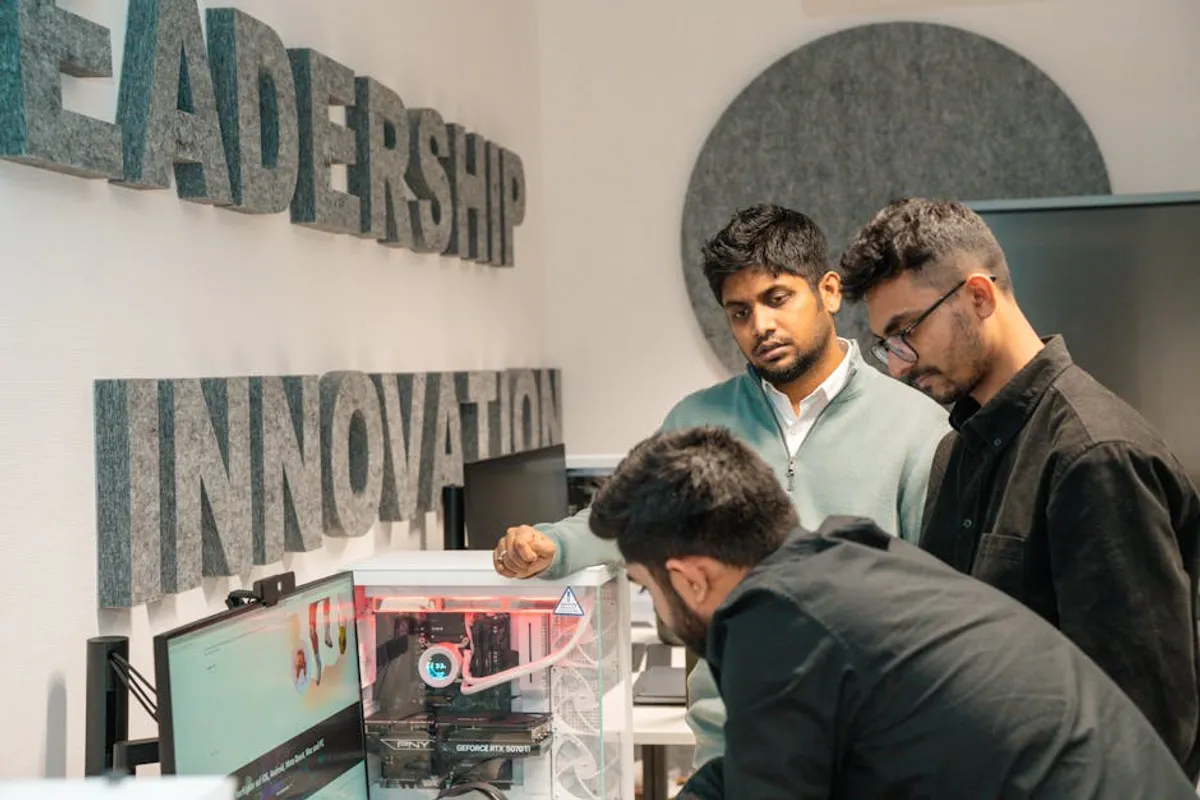
Founders navigating the contemporary business landscape face an imperative to not merely observe, but actively integrate, emergent innovation trends. The velocity of technological advancement and shifts in consumer behavior mean that static business models are increasingly vulnerable. Understanding these pivotal trends is not a discretionary exercise; it is a foundational requirement for securing competitive advantage, fostering sustainable growth, and ensuring market relevance. This analysis outlines the critical innovation trajectories that demand founders' strategic attention, offering a framework for proactive engagement rather than reactive adjustment.
Key Innovation Trends Shaping Modern Business
AI-Driven Personalization and Automation
Artificial intelligence (AI) is moving beyond theoretical application into concrete operational enhancements, particularly in personalization and automation. For founders, this translates to leveraging AI to create highly tailored customer experiences, streamline internal processes, and derive actionable insights from vast datasets. Implementing AI for personalized marketing campaigns, predictive customer service, or automated supply chain management offers a direct path to reduced operational costs, increased customer lifetime value, and a more responsive business model. The commercial imperative here is efficiency and precision, allowing founders to scale personalized interactions that were previously resource-prohibitive.
Sustainable and Circular Economy Models
Consumer and regulatory pressures are accelerating the shift towards sustainable and circular economy models. Founders must recognize this as more than a compliance burden; it represents a significant opportunity for market differentiation and long-term resilience. Business models focused on resource efficiency, waste reduction, ethical sourcing, and product longevity resonate strongly with increasingly conscious consumer bases. Initiatives such as product-as-a-service offerings, upcycling programs, or verifiable net-zero commitments can enhance brand reputation, attract investment, and unlock new revenue streams by transforming waste into value. This trend demands a re-evaluation of the entire product lifecycle and supply chain, moving from linear consumption to restorative design.
Hyper-Personalized Customer Experiences (CX)
The expectation for bespoke interactions has become a baseline for customer engagement. Hyper-personalization, driven by advanced data analytics and AI, allows founders to move beyond segmented marketing to individual-level relevance. This involves leveraging every available data point – from purchase history and browsing behavior to demographic and psychographic profiles – to deliver unique product recommendations, contextual content, and timely, relevant offers. For founders, superior CX directly correlates with increased customer loyalty, higher conversion rates, and a distinct market advantage. It transforms transactional relationships into enduring partnerships, reducing churn and amplifying advocacy.
Web3 and Decentralized Technologies
Web3, encompassing blockchain, non-fungible tokens (NFTs), decentralized autonomous organizations (DAOs), and metaverse concepts, introduces new paradigms for ownership, community, and digital interaction. While still nascent, founders should monitor and strategically experiment with these technologies to understand their potential to disrupt existing business models. This could involve creating new forms of digital assets, establishing token-gated communities for enhanced customer engagement, or exploring decentralized governance structures. The commercial value lies in fostering new ownership economies, building deeply engaged communities, and unlocking novel revenue streams through digital scarcity and verifiable provenance.
Pro Tip: While Web3 technologies offer transformative potential, founders should approach adoption with a clear understanding of their current speculative nature and regulatory uncertainties. Prioritize use cases that solve genuine business problems or enhance user value, rather than simply chasing hype. Focus on foundational understanding and small-scale experimentation before significant investment.
Data Ethics and Privacy-First Approaches
With increasing data breaches and regulatory scrutiny (e.g., GDPR, CCPA), founders must embed data ethics and privacy-first principles into their operations. This is no longer merely a legal requirement but a fundamental component of building consumer trust and brand integrity. Transparent data handling practices, robust privacy policies, clear consent mechanisms, and a demonstrable commitment to data security can differentiate a business in a crowded market. For founders, prioritizing privacy builds long-term customer relationships, mitigates reputational risk, and positions the company as a responsible steward of personal information. This proactive stance can turn regulatory compliance into a competitive advantage.
Implementing Innovation: Founder's Action Plan
Cultivating an Innovation-Focused Culture
Sustainable innovation stems from an organizational culture that encourages experimentation, tolerates failure, and values continuous learning. Founders must actively foster environments where employees feel psychologically safe to propose new ideas, challenge existing norms, and collaborate across functional silos. Practical steps include allocating dedicated "innovation time" or budgets, organizing internal hackathons, establishing cross-functional ideation committees, and recognizing contributions to new initiatives. This cultural bedrock ensures that innovation is an ongoing process, not a sporadic event.
Strategic Partnerships and Ecosystem Building
No single company possesses all the necessary resources or expertise to innovate in isolation. Founders should actively seek strategic partnerships with startups, academic institutions, technology providers, or even larger corporations. These collaborations can provide access to specialized technologies, new market segments, shared R&D costs, and accelerated development cycles. Building an ecosystem of complementary partners allows for shared risk and diversified innovation efforts, significantly extending a founder's reach and capacity.
Agile Adaptation and Continuous Learning
The pace of change demands an agile approach to business development. Founders must embrace iterative development cycles, rapid prototyping, and constant feedback loops. This means moving away from rigid, long-term planning towards flexible strategies that can be quickly adjusted based on market response and emerging data. Continuous learning, both at an individual and organizational level, is paramount. This includes staying informed on technological advancements, market shifts, and consumer preferences, ensuring the business remains responsive and relevant.
Translating Trends into Tangible Growth
For founders, merely acknowledging these innovation trends is insufficient. The critical step lies in translating observation into actionable strategy and operational integration. This requires a proactive stance: assessing how each trend impacts your specific industry, identifying potential threats and opportunities, and then strategically allocating resources to experiment and adapt. The goal is not to adopt every trend, but to selectively integrate those that align with your core business objectives, enhance customer value, and secure a defensible market position. Founders who embed a culture of continuous innovation and strategic foresight will be best positioned to drive tangible growth and navigate future market complexities.
Frequently Asked Questions
How can a small startup integrate these innovation trends without large budgets?
Small startups can integrate trends by focusing on lean experimentation, leveraging open-source technologies, forming strategic partnerships for shared resources, and prioritizing low-cost, high-impact initiatives. For instance, instead of building proprietary AI, use existing APIs; instead of large R&D, conduct small, targeted pilot programs.
What's the biggest risk for founders ignoring these innovation trends?
The biggest risk is obsolescence. Ignoring innovation trends leads to decreased competitiveness, loss of market share to more agile competitors, inability to meet evolving customer expectations, and ultimately, a decline in long-term viability and growth potential.
How often should founders re-evaluate their innovation strategy?
Founders should re-evaluate their innovation strategy at least annually, but a more agile approach involves continuous monitoring and quarterly adjustments. Key market shifts, technological breakthroughs, or significant competitor moves should trigger immediate re-assessment.
Are there any innovation trends that are overhyped or require careful evaluation?
Some trends, particularly those in their nascent stages like certain aspects of Web3 or highly specialized AI applications, can be overhyped. Founders should carefully evaluate their practical applicability, scalability, and return on investment for their specific business context, rather than adopting them solely based on industry buzz.