
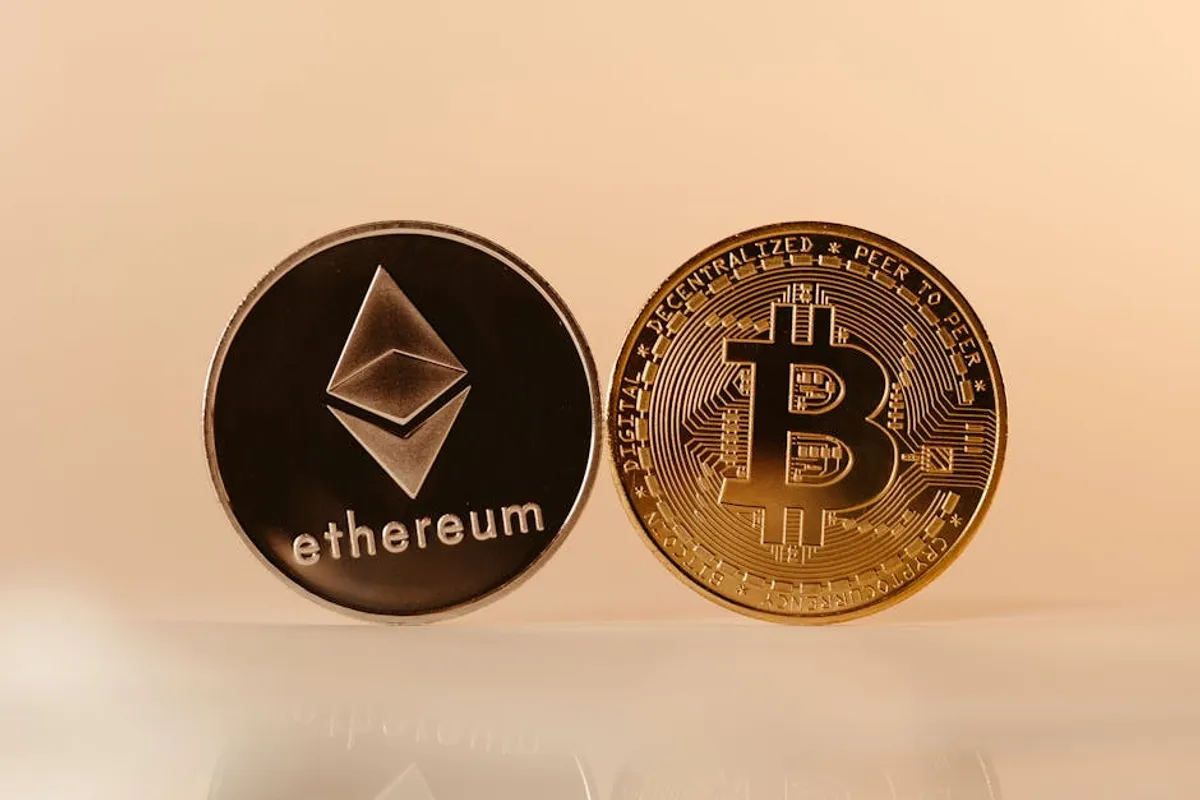
Understanding ETH’s price trajectory involves dissecting its underlying technology, market dynamics, and the broader macroeconomic environment. For investors and traders, ETH represents a significant asset within the digital economy, but its valuation is subject to a complex interplay of factors. This analysis provides a framework for evaluating ETH's current standing, potential future movements, and the inherent risks, equipping stakeholders with a clearer perspective for informed decision-making.
Current ETH Price Dynamics
The immediate price of ETH is a reflection of real-time supply and demand, influenced by trading volume across centralized and decentralized exchanges. Key drivers include daily spot market activity, large institutional purchases or sales, and the impact of significant news events. Short-term volatility is common, often amplified by speculative trading and algorithmic strategies responding to minor market shifts. Analyzing candlestick patterns and volume profiles on a daily or weekly basis offers insight into current market sentiment and potential support or resistance levels. However, these short-term movements are often noise compared to the fundamental shifts in Ethereum's ecosystem.
Outlook and Growth Drivers for Ethereum
Ethereum's long-term outlook is intrinsically linked to its technological evolution and its role as the foundational layer for decentralized applications. Several factors contribute to its potential for sustained growth:
Ecosystem Development and Scalability
The ongoing development of the Ethereum network, particularly through upgrades like the Merge and subsequent enhancements, aims to improve scalability, security, and sustainability. Proof-of-Stake (PoS) consensus has reduced energy consumption, while future sharding and Layer 2 solutions (e.g., rollups) are designed to increase transaction throughput and lower fees. These technical advancements are critical for maintaining Ethereum's competitive edge and attracting new users and developers.
DeFi and NFT Market Influence
Ethereum remains the dominant blockchain for decentralized finance (DeFi) and non-fungible tokens (NFTs). The total value locked (TVL) in DeFi protocols on Ethereum, alongside the trading volume of Ethereum-based NFTs, directly impacts demand for ETH. As these sectors mature and attract broader adoption, the utility and intrinsic value of ETH as the gas token and collateral asset increase. Innovation in these areas often translates into increased network activity and, consequently, demand for ETH.
Institutional Adoption and Integration
Growing interest from institutional investors, including asset managers, corporations, and even sovereign entities, signals a maturation of the ETH market. Products like ETH exchange-traded funds (ETFs) in various jurisdictions, as well as direct investments, provide new avenues for capital inflow. This institutionalization can reduce price volatility over time and provide a more stable demand floor, moving ETH beyond purely retail speculation.
Key Risks for ETH Investors
Despite its potential, ETH investment carries significant risks that warrant careful consideration:
- Regulatory Uncertainty: Governments worldwide are still developing comprehensive regulatory frameworks for cryptocurrencies. Adverse regulations, such as stringent taxation, outright bans, or reclassification of ETH as a security, could severely impact its price and adoption.
- Competition from Other Layer 1 Blockchains: Numerous alternative Layer 1 blockchains offer similar functionalities to Ethereum, often with different trade-offs in terms of speed, cost, and decentralization. While Ethereum maintains a network effect advantage, sustained competition could fragment the market and challenge its dominance.
- Technical Risks and Network Vulnerabilities: Despite rigorous development, any complex software system is susceptible to bugs, exploits, or unforeseen technical issues. A major security breach or a significant failure during a network upgrade could erode trust and lead to substantial price declines.
- Macroeconomic Factors: As a risk asset, ETH's price is often correlated with broader financial markets. Inflation, interest rate changes, geopolitical events, and recessions can influence investor sentiment and capital allocation, leading to sell-offs even without specific crypto-related catalysts.
- Centralization Concerns: While aiming for decentralization, certain aspects of Ethereum, such as staking pool concentration or reliance on specific client software, present centralization risks that could be exploited or lead to governance issues.
Pro Tip: Evaluate ETH's market capitalization relative to its utility and adoption rate. A high market cap without corresponding fundamental growth in transaction volume, developer activity, or TVL could indicate an overvalued asset, whereas a growing ecosystem with a lagging price might signal an undervalued opportunity.
Market Signals and Indicators
Monitoring specific market signals provides additional context for ETH's price movements:
On-Chain Metrics
Analyzing on-chain data offers insights into network health and user behavior. Key metrics include:
- Active Addresses: An increasing number of unique active addresses suggests growing network usage and organic demand.
- Transaction Volume: Consistent high transaction volume indicates strong utility and economic activity on the network.
- Gas Usage: High gas fees and usage imply network congestion and high demand for block space, often preceding price increases.
- Exchange Netflow: Monitoring ETH flowing into or out of exchanges can signal potential selling pressure (inflow) or accumulation (outflow).
Derivatives Market Data
The derivatives market provides forward-looking indicators:
- Funding Rates: Positive funding rates in perpetual futures contracts suggest long positions are dominant and willing to pay shorts, indicating bullish sentiment. Negative rates suggest the opposite.
- Open Interest: Rising open interest, especially alongside price movements, can confirm the strength of a trend.
- Options Skew: The implied volatility difference between out-of-the-money call and put options can reveal market expectations for future price direction.
Social Sentiment and News Flow
While often short-term, social media trends, news headlines, and influencer activity can significantly impact retail investor behavior and contribute to price volatility. Tools that track sentiment across various platforms can provide a pulse on prevailing narratives, though these should be used with caution due to their often speculative nature.
Navigating the ETH Market
Approaching the ETH market requires a blend of fundamental understanding and tactical awareness. Focus on Ethereum's long-term roadmap and its ability to attract developers and users. Understand that price volatility is inherent, and short-term fluctuations can be driven by a range of factors from macroeconomic news to specific network upgrades. Diversification, risk management, and a clear investment thesis based on the ecosystem's utility are crucial. Regularly review the fundamental developments within the Ethereum network, including progress on scalability solutions and the growth of its DeFi and NFT sectors, as these are the primary drivers of its intrinsic value.
Frequently Asked Questions
What is the primary utility of ETH?
ETH serves multiple utilities within the Ethereum ecosystem, primarily as the native currency for paying transaction fees (gas), as collateral for DeFi applications, and as the base asset for staking to secure the network.
How do Ethereum network upgrades impact ETH's price?
Major network upgrades, such as the Merge or future scalability improvements, can significantly impact ETH's price by improving its fundamental utility, reducing supply through staking, or addressing long-standing technical limitations, thereby attracting more users and investors.
Is ETH considered an inflationary or deflationary asset?
Following the Merge and the implementation of EIP-1559, ETH's supply issuance has significantly decreased, with a portion of transaction fees being burned. This mechanism can make ETH deflationary during periods of high network activity, reducing its total supply over time.



